Red and near-infrared, in plain English
Light is measured in nanometers (nm). Visible red light runs roughly from 620 to 700 nm; near-infrared (NIR) starts just past what your eyes can see, around 750 nm, and panels use it up to about 1060 nm. Red light is the glow you see; near-infrared LEDs look dim or dark, even when they're on.
Brands and researchers generally say red light acts closer to the surface, which is why it's the focus for skin, and near-infrared reaches deeper tissue, which is why it's the focus for muscles and joints. That's the logic behind the classic 660 + 850 nm pair, which almost every panel on our list uses. Research on what each wavelength does is still young; treat brand claims about specific uses as claims.
What each panel on our list uses
- Two wavelengths (660 + 850 nm): Hooga HG300, PRO300, PRO750 and PRO4500; MitoMID 2.0; Bon Charge Max and Super Max; Joovv Solo 3.0 and Elite 3.0.
- Four: the Kala Elite 2.0 (630, 660, 830, 850 nm).
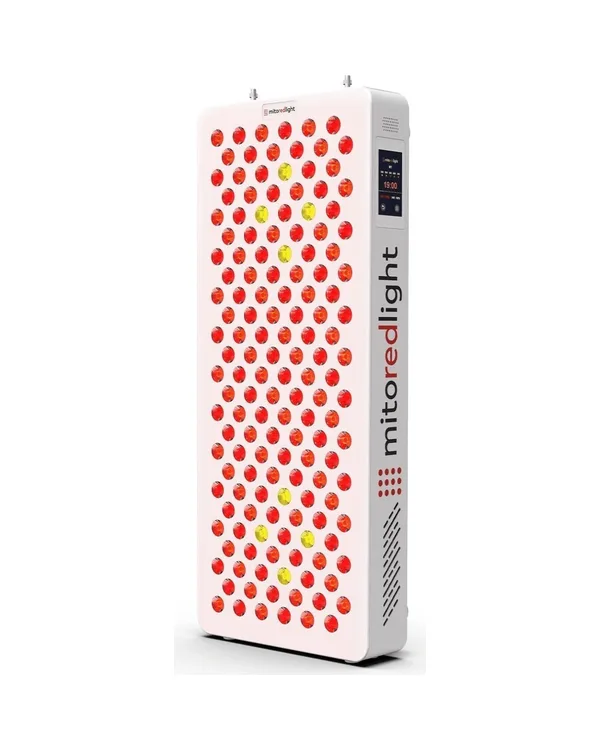
- Six: the MitoPRO 750X (590, 630, 660, 810, 830, 850 nm).
- Seven: the PlatinumLED BioMax 900 (480, 630, 660, 810, 830, 850, 1060 nm).
- Eight: the MitoADAPT MAX 4.0 (590, 630, 660, 670, 810, 830, 850, 940 nm) and the Rouge Pro G4 (630, 650, 660, 670, 810, 830, 850, 1060 nm).
Notice that the most popular brand, Joovv, sticks to two. So does Hooga, which puts its money into dual-chip LEDs instead.
The extra wavelengths, and what brands say about them
Here's how brands describe the extras. These are their words, not our findings.
- 590 nm (amber): Mito Red Light includes it on its X and ADAPT panels, aimed at skin.
- 630 and 650 nm: shorter reds, mostly pitched for skin sessions.
- 670 nm: Mito Red Light calls it the leading wavelength in current eye, brain and mitochondrial research. It's also on the Rouge Pro G4.
- 810 and 830 nm: extra near-infrared peaks next to 850, to spread the output.
- 940 nm: Mito Red Light calls it the deepest-penetrating wavelength in the therapeutic near-infrared window.
- 1060 nm: on the PlatinumLED BioMax and the Rouge Pro G4. Rouge markets it for fat loss; we don't repeat that claim.
- 480 nm (blue): only on the PlatinumLED BioMax among our panels. Blue light is usually associated with skin-surface uses.
Do more wavelengths make a better panel?
Not on their own. Brands disagree openly here: PlatinumLED says there is no scientific need to control individual wavelengths inside the red or near-infrared group, and calls that feature a marketing gimmick. Mito Red Light and Rouge build their top panels around exactly that control. Neither side has settled it.
What we'd focus on instead:
- Both red and near-infrared, so one panel covers skin and deeper-tissue sessions.
- Separate modes (red only, NIR only, both), which most panels on our list offer.
- Even coverage. Dual-chip LEDs put both wavelengths in every LED, like Hooga's PRO series, the MitoPRO X and the Rouge Pro G4. Single-chip panels alternate red and NIR LEDs, which is fine from a step back.
Our formula gives wavelength spread 15% of the score: a panel with eight published peaks gets more credit than one with two, and a panel without both red and near-infrared loses points. It doesn't decide the ranking on its own.
Dual-chip LEDs, beam angle and what the label leaves out
A wavelength list tells you which colors a panel can make. It doesn't tell you how they're spread across the panel, and that changes how even your session feels.
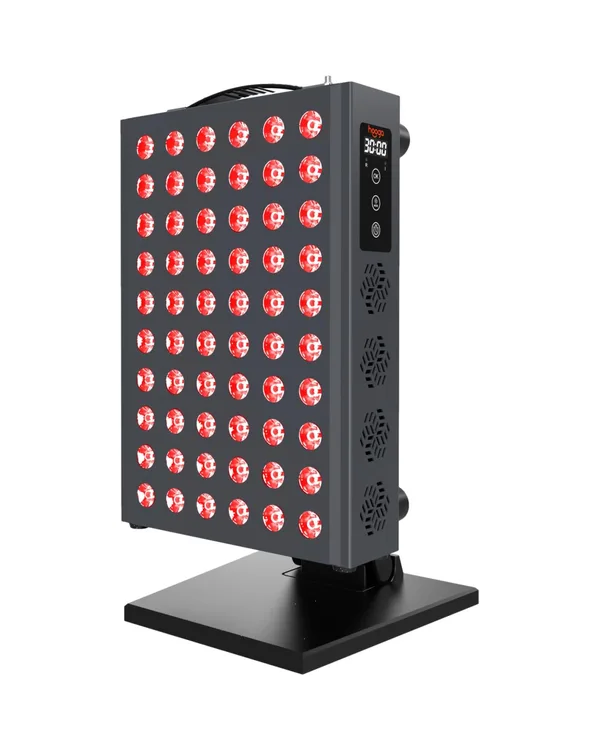
Single-chip vs dual-chip. On the Hooga HG300, red and near-infrared LEDs alternate: 60 single-chip LEDs, half of each. On the Hooga PRO300 and PRO750, every LED carries both a 660 nm and an 850 nm chip. Mito Red Light calls its version TruDUAL, two independent chips under one lens, and Rouge and Bon Charge also use dual-chip 5 W LEDs. Joovv takes the other route on the Solo 3.0: 150 LEDs, 76 red and 74 near-infrared. Dual-chip designs put both colors at every point, which matters most when you sit close.
Beam angle. Few brands publish it. Hooga lists 60° on its panels; Rouge and the Bon Charge Max list 30°. A narrower beam keeps more light in a tight area at a given distance, a wider one spreads it over more of you. Neither is better in itself, but a published angle is one more sign the brand knows its optics.
Control. Eight wavelengths you can't switch apart are less useful than two you can. The Rouge Pro G4 dims each wavelength on its own, the MitoADAPT MAX 4.0 runs eight circuits independently, the Hooga PRO series splits red and near-infrared, and the MitoMID 2.0 offers red, near-infrared or both.
One practical note: 850 nm looks dim, so the panel can seem weaker than it is. Wear the goggles the brand puts in the box and don't stare at the LEDs.
Which spectrum should you buy?
You want a simple daily routine: 660 + 850 nm is plenty. The Hooga PRO300 ($299) or the MitoMID 2.0 ($449) are good, documented options.
You share the panel or like to experiment: pick one with wide spectrum and real control, like the MitoPRO 750X ($749, six wavelengths, 100% red or 100% NIR) or the Rouge Pro G4 ($1,046, eight wavelengths with dimming per wavelength).
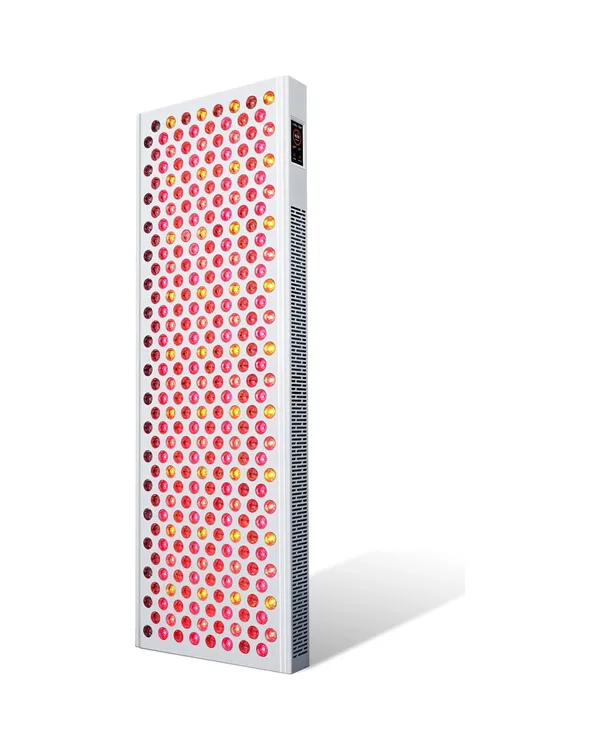
You want everything in one big panel: the MitoADAPT MAX 4.0 ($1,499): eight wavelengths, eight circuits, 11 modes, 36 inches. See our full ranking or put three panels side by side in the comparison tool.
This guide is for buying decisions, not medical advice. If you are pregnant, have a skin or eye condition, or take medication that makes you sensitive to light, talk to your doctor before you start.
The panels in this guide, side by side
| Panel | Hooga PRO3009.2/10 | MitoPRO 750X9.5/10 | MitoADAPT MAX 4.09.5/10 |
|---|---|---|---|
| Price | $299 | $749 | $1,499 |
| Panel size | 8.6 × 12.7 in | 10 × 23 in | 12 × 36 in |
| Price per sq in | $2.74/sq in | $3.26/sq in | $3.47/sq in |
| Wavelengths | 660 + 850 nm | 6 wavelengths, 590–850 nm | 8 wavelengths, 590–940 nm |
| Irradiance (brand claim) | 109 mW/cm² at 6 in | 160 mW/cm² at 6 in | 140 mW/cm² at 6 in |
| EMF | 0.0 μT at 6 in | Claim, no figure | Claim, no figure |
| Warranty | 3-year | 3-year | 3-year |
| Returns | 60 days | 60 days | 60 days |
| Buy | See price | See price | See price |